
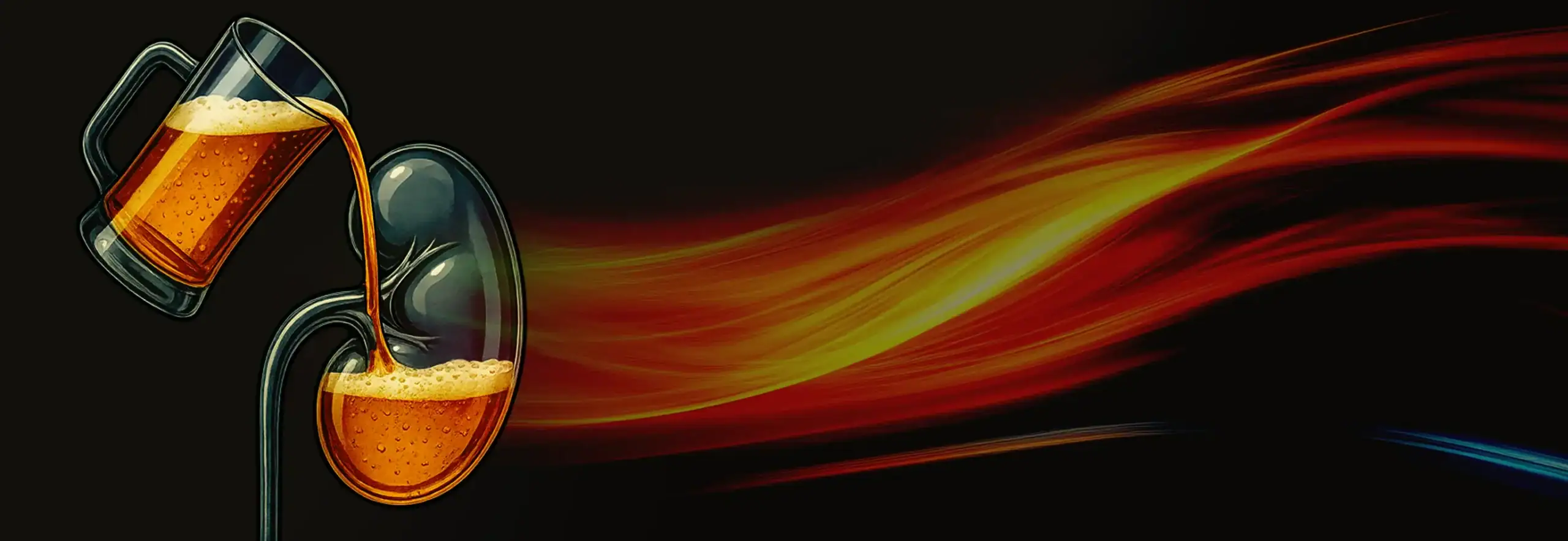
Ever felt unusually dehydrated or noticed discomfort after a few drinks? It is not just your liver bearing the burden — your kidneys and urinary system are deeply affected by alcohol, too. From triggering kidney stones to increasing the risk of urinary tract infections, alcohol can quietly damage your internal filtration system.
Here is what you need to know — and for what your urologist wants you to watch out.
The Kidney’s Role in Alcohol Metabolism
Your kidneys help filter out waste, maintain fluid balance, and regulate essential minerals. When alcohol enters your system:
- It acts as a diuretic, making you urinate more.
- It dehydrates the body, reducing blood flow to the kidneys.
- It interferes with hormone production that affects kidney function.
The kidneys experience prolonged strain from drinking which may result in serious health problems including kidney stones and infections.
How Alcohol Leads to Kidney Stones
Alcohol does not directly “cause” stones, but it creates the ideal conditions for them to form:
- Dehydration → Concentrated urine allows minerals like calcium and uric acid to crystallise.
- Uric Acid Overload → Common in beer and red meat-heavy diets, leading to uric acid stones.
- Calcium Imbalance → Alcohol interferes with absorption and excretion, affecting stone risk.
Real Example: Many patients experience flank pain and blood in urine after summer parties — a classic kidney stone scenario linked to dehydration and alcohol.
Alcohol’s Role in Urinary Tract Infections (UTIs)
Alcohol weakens your immune system and dries out your urinary tract, making it easier for bacteria to thrive.
- Women may experience UTIs more frequently due to anatomical factors.
- Men with prostate inflammation may see worsening symptoms after drinking.
- Delayed urination after drinking can increase bacterial build-up.
Those with recurring urinary tract infections are often advised to reduce or eliminate alcohol to prevent flare-ups.
Symptoms to Watch If You Drink Regularly
Pay attention to these red flags:
- Persistent lower back pain or abdominal discomfort
- Cloudy, foamy, or strong-smelling urine
- Frequent urge to urinate, especially at night.
- Pain or burning during urination.
- Blood in urine or swelling in ankles.
These signs may point to kidney stones, infections, or reduced kidney function.
Do’s and Don’ts: Alcohol & Kidney Health
| ✅ Do This | ❌ Avoid This |
| Drink 2–3 litres of water daily | Binge drinking or mixing alcohol with energy drinks |
| Alternate alcoholic drinks with water | Ignoring back pain or changes in urination |
| Eat a kidney-friendly diet (low sodium, moderate protein) | Consuming alcohol when already dehydrated |
| Get regular urine and blood tests | Relying on beer or wine for hydration (myth!) |
| See a urologist if prone to stones or UTIs | Using alcohol as a stress-relief substitute |
Gender-Specific Impacts of Alcohol on the Urinary System
🔹Women
- Higher risk of urinary tract infections due to shorter urethra
- More vulnerable to post-drinking dehydration
🔹Men
- Alcohol can aggravate prostatitis or cause urinary retention.
- May lower testosterone and impact sexual health over time
Understanding these differences can help tailor prevention and treatment.
Diagnostic & Treatment Options Available in Dubai
A urology consultation will help you if you have recurring symptoms. Services include:
- Urine culture, ultrasound, and CT scan for kidney stones
- Bladder and prostate screening
- Laser treatment or shock wave lithotripsy (SWL)
- Preventive hydration and dietary strategies
- Long-term management for recurring urinary tract infections.
How to Minimise Alcohol’s Impact on Your Kidneys
Want to enjoy responsibly without harming your health? Follow these expert tips:
- Drink a full glass of water between alcoholic beverages.
- Limit high-purine alcohols (beer, whisky, red wine)
- Avoid high-salt or high-protein meals when drinking.
- Add lemon, citrate, or magnesium to your diet (kidney-friendly)
- Take alcohol-free days every week.
- Monitor urine colour — clear = hydrated!
When to See a Urologist
You should book an appointment if you experience:
- Repeated kidney stones or infections
- Blood in your urine
- Sudden or painful urination
- Frequent urination disrupting sleep.
- Lower back pain or fatigue post-drinking
Early diagnosis can prevent long-term kidney damage.
Your Kidneys Remember Every Drink
Whether you are a social drinker or enjoy the occasional weekend indulgence, your kidneys are keeping score. From increasing the risk of kidney stones to weakening your body’s defence against urinary tract infections, alcohol affects more than just your liver.
If you are concerned about your urological health or want a tailored prevention plan, Dr. Mahesh Dhanjee provides expert, personalised care. Book your consultation with us and support your kidneys the right way.
FAQ: Urologist Answers Common Alcohol & Kidney Questions
Q1: Can alcohol directly cause kidney stones?
Not directly, but it promotes dehydration and uric acid buildup, which can lead to kidney stones.
Q2: Why do I feel pain near my kidney after drinking?
It could be dehydration-related kidney stress or a sign of stones/inflammation. A urology exam is essential.
Q3: Is beer safer than spirits for kidneys?
Not necessarily. The purines found in beer increase the possibility of developing uric acid stones.
Q4: Can alcohol cause recurrent UTIs?
Yes. Alcohol suppresses immunity and delays urination, allowing bacteria to grow in the urinary tract.
Q5: I have passed a kidney stone before. Can I drink socially?
Occasional, moderate drinking with hydration may be okay, but consult your urologist — especially if you have had stones more than once.